Cart
0
You may also like



Fresh flowers start losing moisture within 4 to 6 hours of being cut, and a bouquet sitting in a room overnight already starts showing the signs of wilting by the next afternoon. This window is why the bouquet preservation method you choose matters more than most brides realize.
A wrong preservation method doesn’t just bring bad outcomes; it might damage the flower completely. There are many methods currently dominating the wedding industry right now, where different methods interact with flower structure differently. This guide breaks down which bouquet preservation method fits which bouquet type, so the decision of your flower preservation comes from facts specific to your flowers, not a generic list every florist site repeats.
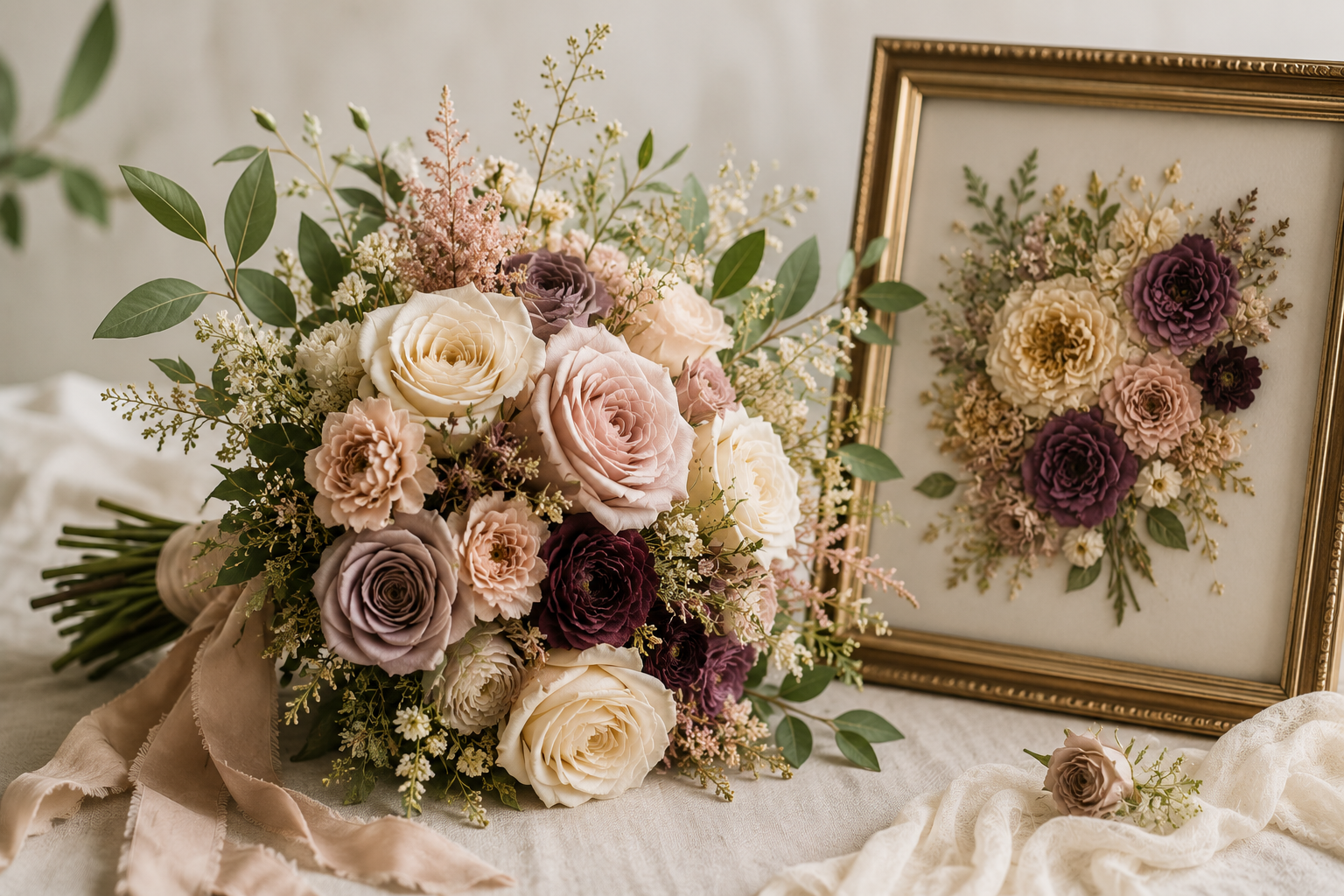
A single wedding bouquet can cost anywhere from $200 to $800, and once the reception ends, no amount of money buys a second one. The way it was arranged, the exact flowers your florist chose, the moment you carried it down the aisle — preservation keeps that specific object intact instead of letting it become a memory with no proof left behind.
Keeping the bouquet matters, but choosing the right bouquet preservation method matters just as much. Different methods produce different results, and each one works on your flowers in a different way:
Layered, thin-petaled blooms bruise or tear under pressing pressure and need gentler handling, like extra padding or a slower drying process
Sturdy, single-layer flowers hold their shape well and handle pressing or freeze-drying with minimal damage
Fine greenery and filler stems dry faster than the main blooms, so a method timed for the flowers can leave the filler over-dried and crumbling first
Choosing a method without accounting for these differences risks the flowers most worth saving. A delicate bloom flattened at the same pressure as a sturdy one won't survive the process intact.
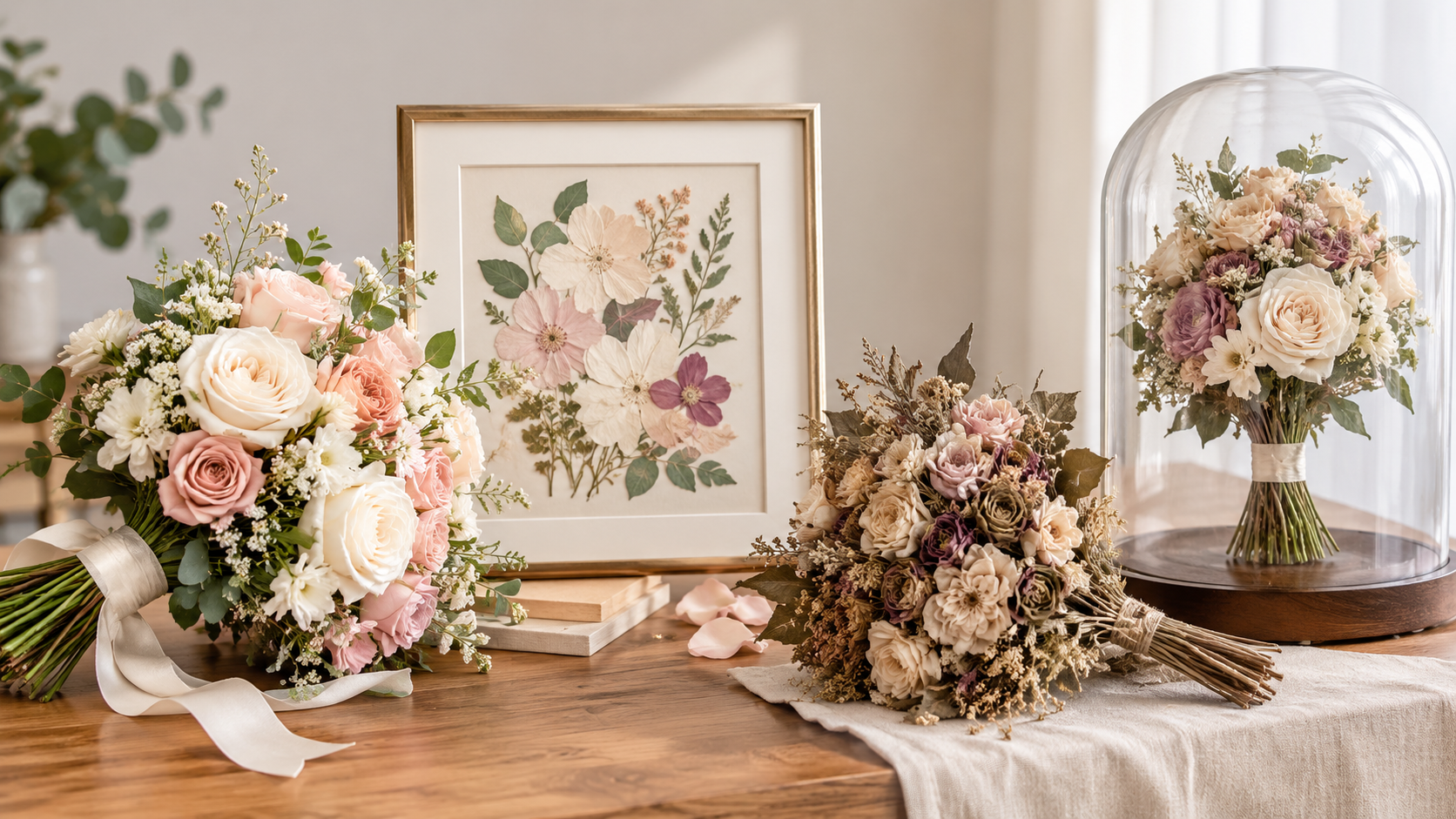
The three most popular preservation methods you'll notice everywhere are pressing, air drying, and freeze-drying. Each one starts with the same bouquet and ends with a completely different object.
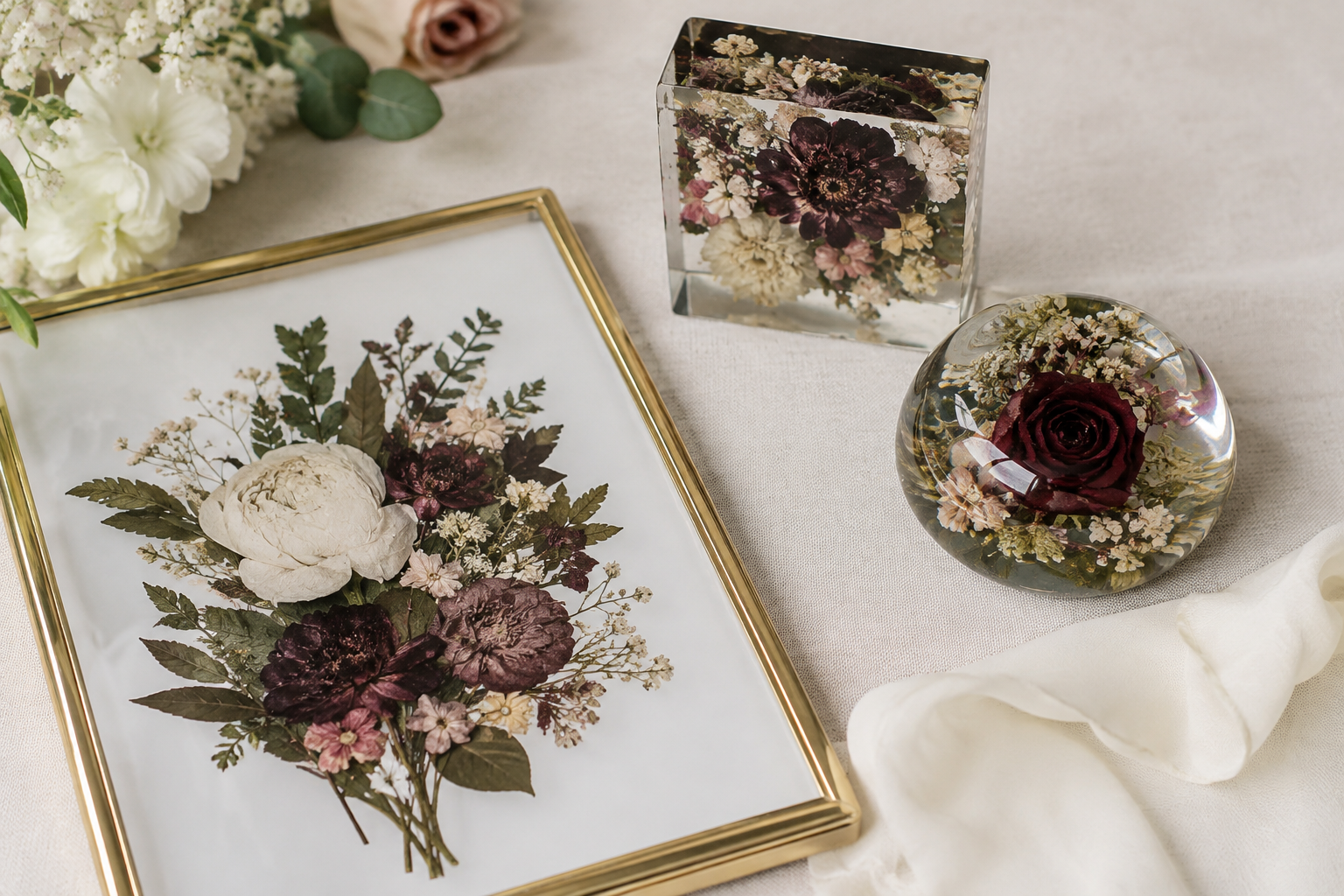
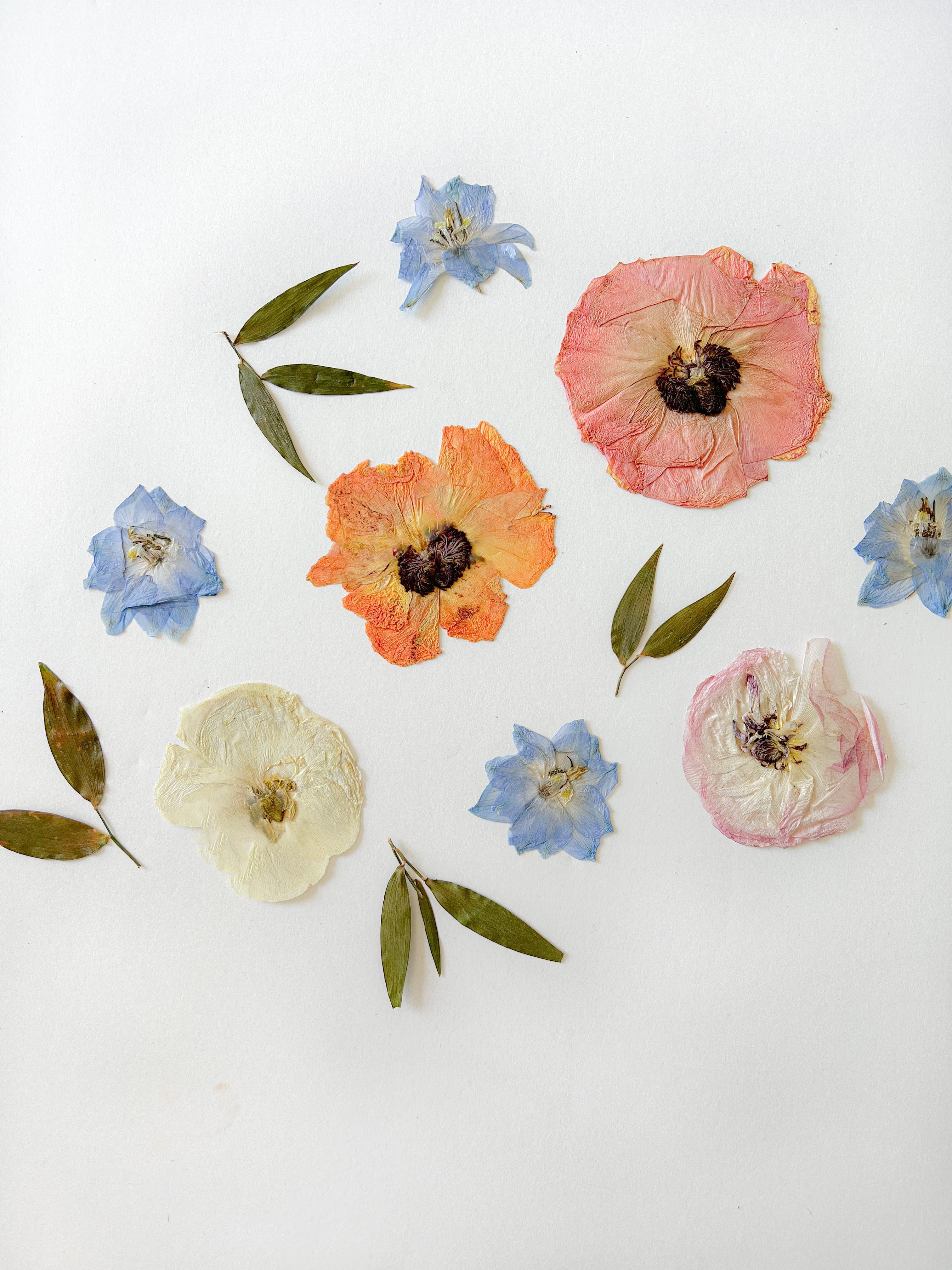
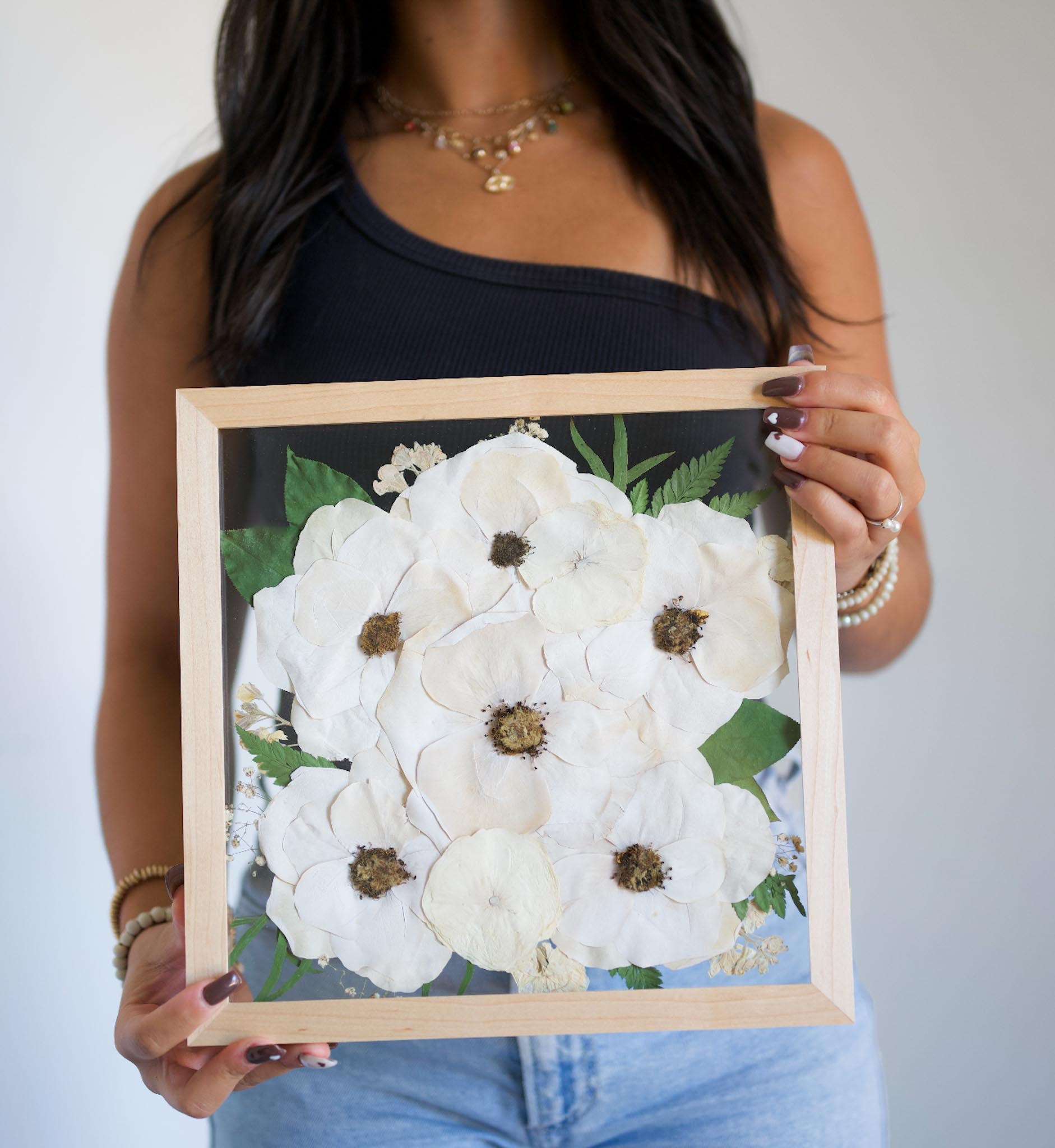
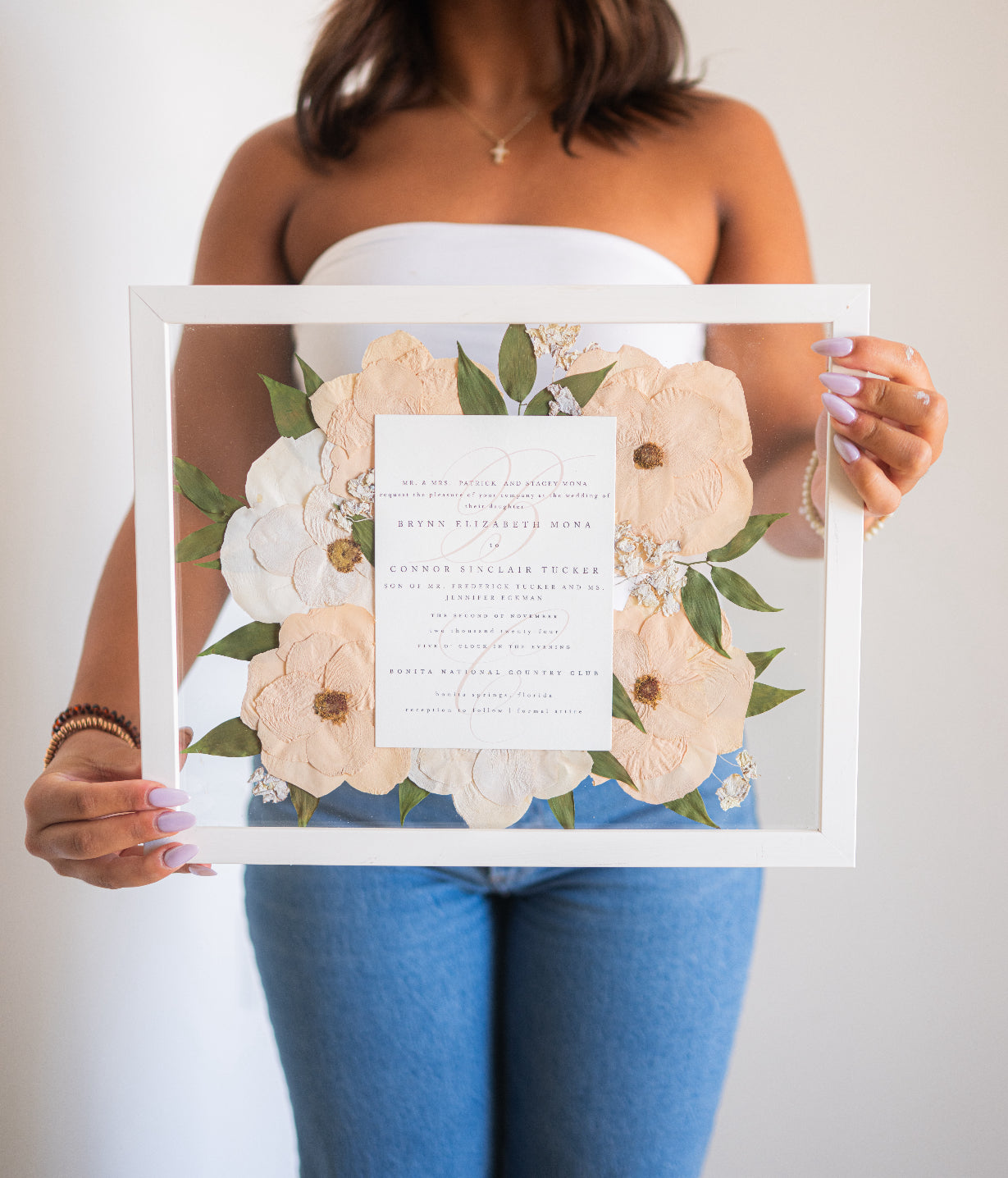
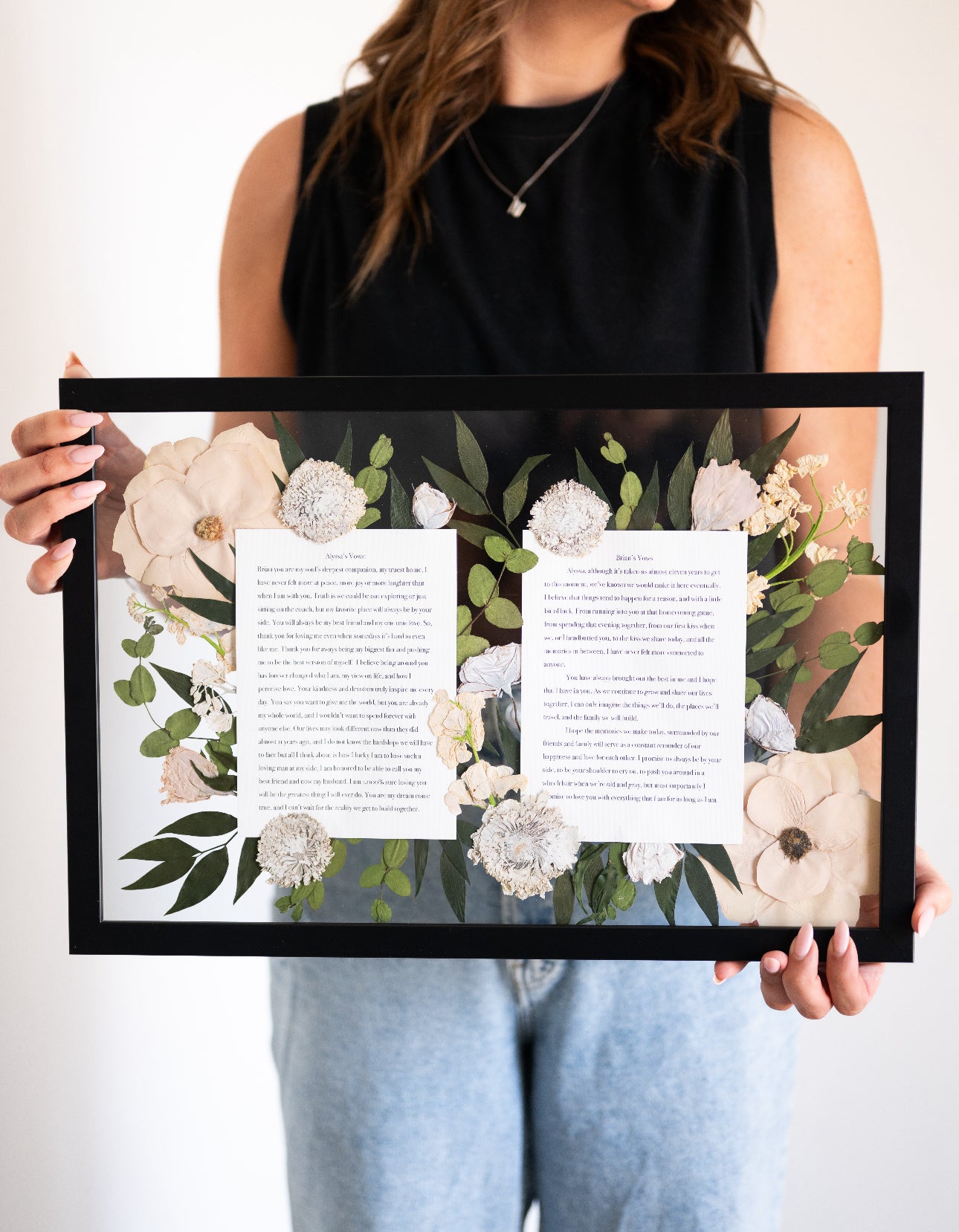
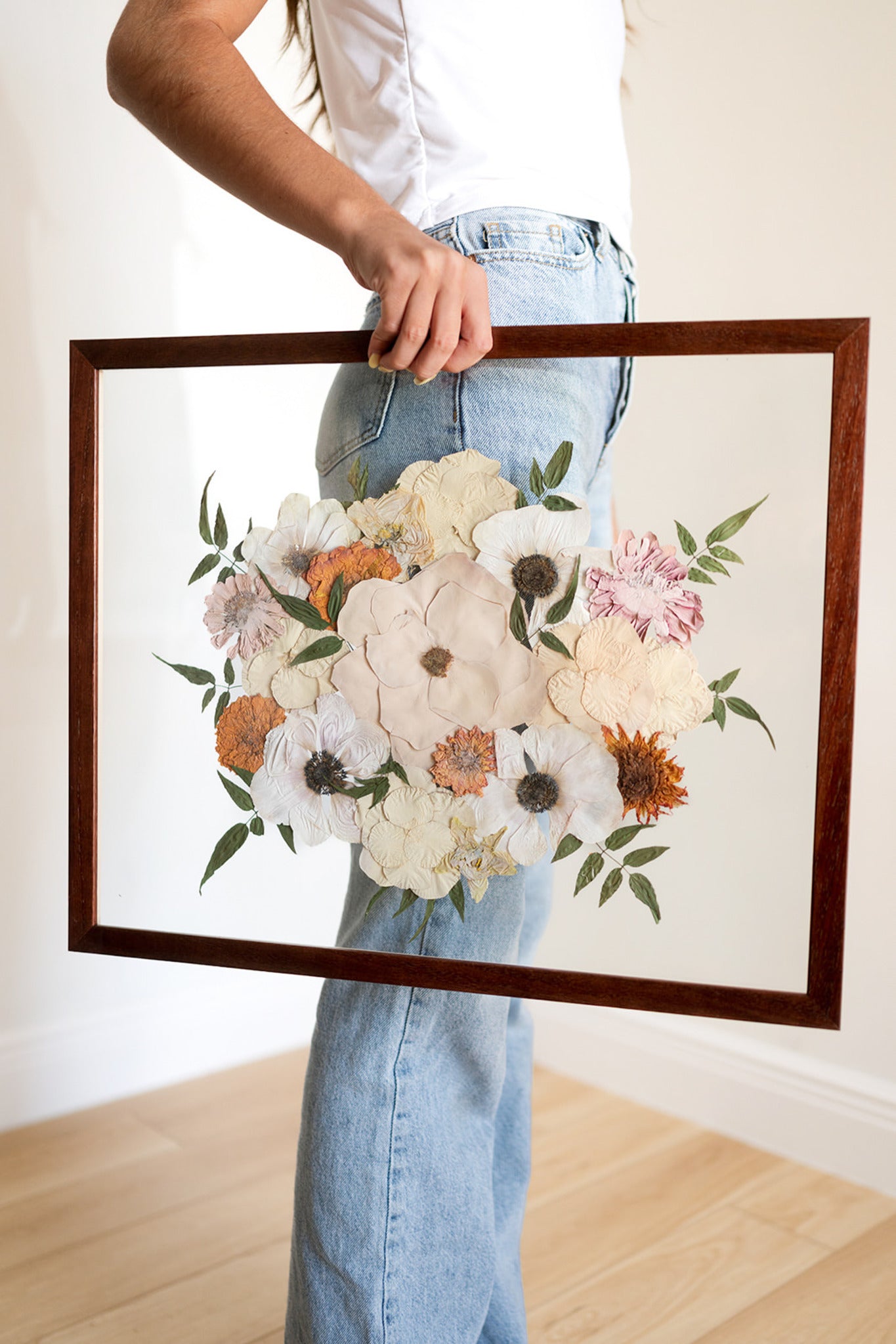
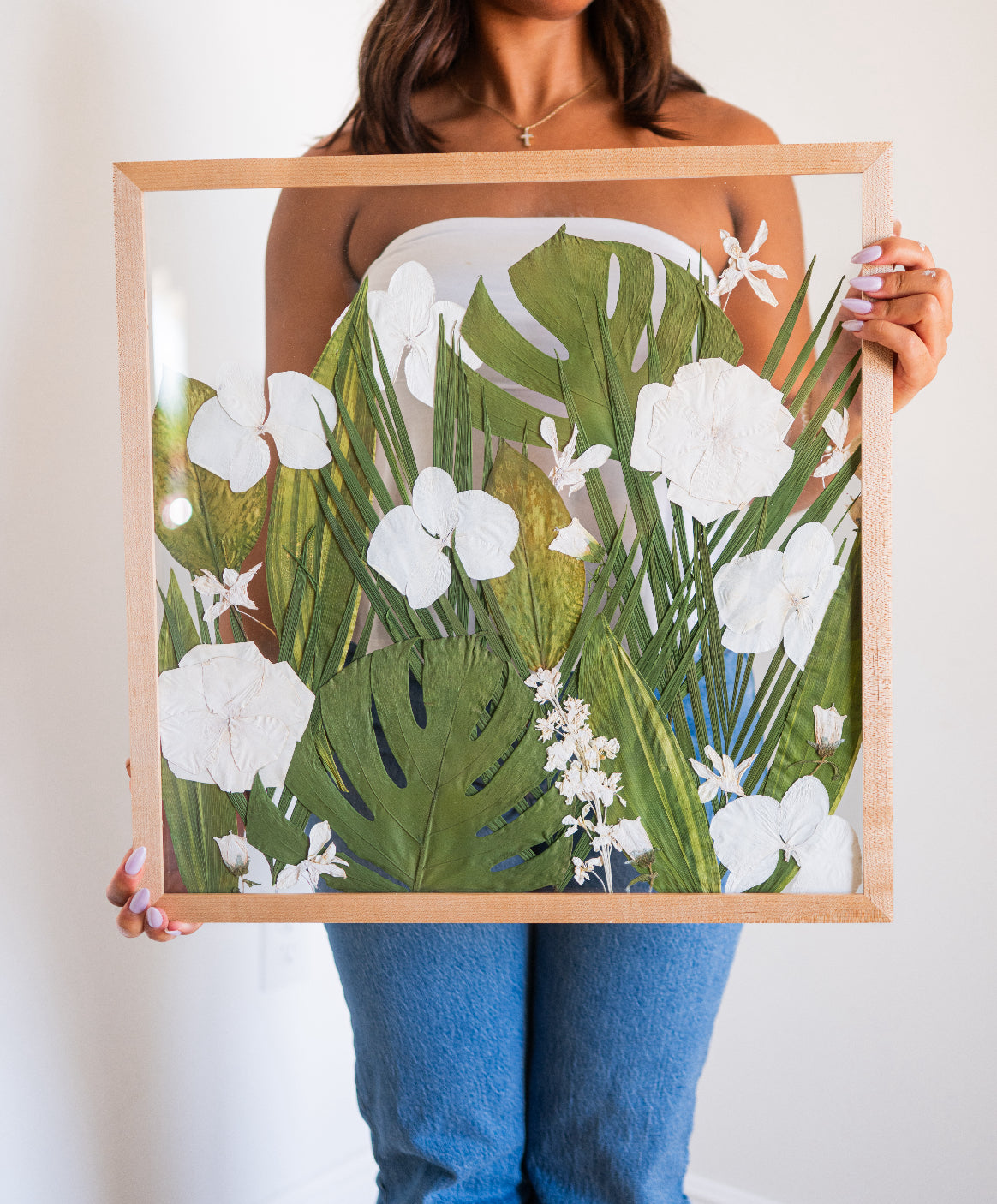
As a bouquet preservation method, pressing removes moisture from the bouquet slowly, flattening each bloom between weighted layers until only a thin, dried version remains. The process turns a three-dimensional bouquet into something closer to botanical illustration, flat, detailed, and ready to frame.
Not every flower responds the same way:
Thin, single-layer blooms flatten cleanly and keep most of their shape
Thick, layered flowers often bruise or lose petals under the pressure needed to flatten them
Greenery and smaller filler stems press faster and need less time than the main flowers
A full pressing cycle typically takes 4 to 6 weeks, depending on how much moisture the flowers held at drop-off.
The real issue with most pressing services isn't the flattening. It's the color afterward. Pressed petals often turn brown or dull within months, because pressing alone doesn't stop pigment breakdown. That's the gap color correction closes. Restoring the original tones after pressing means the framed piece still looks like the actual wedding flowers a decade later, not a faded outline of them.
Best for: Pressing fits best for brides who picture their bouquet as wall art, something flat, detailed, and permanent, rather than a three-dimensional keepsake sitting on a shelf.
Air drying works by hanging the bouquet upside down in a dry, dark space, letting moisture leave the flowers slowly over several weeks. No pressure gets applied anywhere, so the bouquet keeps much of its original volume and shape instead of flattening out.
Results vary a lot by flower type:
Sturdy, low-moisture blooms hold their shape and color reasonably well through the full drying period
High-moisture flowers, like hydrangeas or peonies, often shrink, curl, or brown before drying finishes
Stems thin out and become brittle, which means the finished bouquet needs careful handling once dry
A full air-drying cycle usually takes 2 to 3 weeks, faster than pressing, but far less forgiving of mistakes along the way.
The trade-off with air drying comes down to color versus shape. Flowers keep their dimensional form, but pigments fade and shift toward muted, sepia-like tones as moisture leaves the petals. Nobody stops that shift once it starts.
Best for: Air drying fits best for brides who want a rustic, dimensional keepsake and don't mind the flowers looking different from their original color, more vintage than vivid.
Freeze-drying works differently from the other two bouquet preservation methods . Flowers get frozen at extremely low temperatures first, then placed in a vacuum that pulls moisture out as vapor, skipping the liquid stage entirely. No heat touches the petals at any point, which is why color and shape survive the process better than any other method.
The results speak for the trade-offs involved:
Petals keep close to 90 to 95 percent of their original color, even months later
Full three-dimensional shape stays intact, so the bouquet looks nearly identical to the day it was made
Delicate blooms that bruise under pressing hold up well here, since no physical pressure gets applied
The catch is time and cost. A freeze-drying cycle takes 10 to 16 weeks, two to three times longer than pressing, and the equipment required makes it the most expensive option on this list.
Best for: Freeze-drying fits best for brides who want their bouquet to look almost untouched by time and who are willing to wait longer and pay more for that level of accuracy.
The right bouquet preservation method comes down to what matters most to you: display style, timeline, budget, or color accuracy. Here's how to match your priorities to the right choice.
Choose pressing if:
You're planning to frame and hang the piece on a wall
Your bouquet has thin, single-layer flowers that flatten cleanly
Choose air drying if:
You want to keep the bouquet's full, dimensional shape rather than a flat piece
Your flowers are sturdy and low-moisture, roses and similar blooms rather than hydrangeas or peonies
Choose freeze-drying if:
Your bouquet includes delicate, layered flowers that bruise easily under pressure
You want the closest possible match to how the flowers looked on your wedding day
For most brides, pressing with color correction hits the strongest balance overall. It solves pressing's biggest weakness, faded color, while staying faster and more budget-friendly than freeze-drying.
Ultimately, flowers don't wait for you to make up your mind. Every day past your wedding date reduces what any bouquet preservation method can actually save, so the choice matters less in theory and more with each passing hour. Once you know which bouquet preservation method fits your bouquet, moving quickly protects the result more than any technique on this list.
Still have flowers to send and a method in mind? Book your bouquet preservation with Olive Branch Studios. Not sure yet which option fits your bouquet best? Reach out with your questions, and we'll help you land on the right one before it's too late to choose at all.
The sooner, the better, since flowers start losing moisture within hours. Olive Branch Studios accepts bouquets up to 10 days after your event.
Some wilting doesn't rule out preservation, but results depend on how far the flowers have degraded. Sending it right away gives the best chance at a strong outcome.
Keep it cool, upright, and away from direct sunlight during transit. Following a proper shipping process protects the flowers from damage before they even arrive.
Color correction helps the piece hold its tone far longer than uncorrected pressing. Keeping it out of direct sunlight after that preserves the color even further.
A short delay doesn't automatically rule anything out within the 10-day window. The studio checks each bouquet's condition on arrival and lets you know what's realistic from there.

Hope founded Olive Branch Studios in 2020 while dedicating her time to mission work. With a passion for art and a heart for service, she initially created pressed flower art to support her missions. Her creative vision and commitment to craftsmanship have shaped Olive Branch Studios into the thriving business it is today. Hope continues to lead the company’s artistic direction, infusing each project with her unique touch and unwavering dedication.